Showing posts with label uncles. Show all posts

Friday, 12 September 2025

Spotlight On ... Three Brothers and Three Dogs

This is another of my "Spotlight" posts - a way of sharing precious family photos that capture wonderful moments in time, but often those moments have no context and no story attached to them.

Family historians know that feeling, when a wonderful old photograph has no caption, no note in the album, and no one left from that generation to ask "What was happening here?".  

Yet even a "silent" picture can speak volumes when we look closely, delve deeply and make every effort to set it within our family context.  This is one of those photos:

Connors Brothers
Photo shared by Keith Connors (my cousin)
Keith's father is on the right

It's a particular favourite of mine.  At first glance, you can see three young men - my paternal uncles - seated in a neat row on wooden chairs, outdoors, against a backdrop of vines and a timber verandah.  A blanket has been laid on the ground in front, which tells me this wasn't a casual snap but a carefully staged family portrait, likely taken to mark a very special day for the Connors family. 


Who's who (left to right)?


  • Thomas Richard "Tommy" Connors (left): looking very dapper with a short back-and-sides haircut; sporting a jacket over shorts; a detachable-style collar with a bow tie; knee socks and lace-up ankle boots.


  • George Thomas Connors Jnr. (middle):  youthful George, named after his father, wearing a short-pants suit; long socks with turnovers / garters; and high lace-up boots.


  • Colin Vincent Connors (right):  looking cool and confident with fuller, swept hair; a suit with a soft detachable collar and necktie; and lace-up boots.

Dating the Photograph


These young men were the eldest sons of my paternal grandparents, George Thomas Connors and Grace Olive Brown.  After these three, there was a seven-year gap before another son, Leo, was born in 1921 - heart-breakingly, he died in infancy.  Three years later, twin sons arrived in 1924 - my father Bede William and his twin brother Reginald Frederick Connors.

Those milestones help bracket the likely date of this picture.

The young men are dressed to the nines - short-pants suits, smart collars, polished boots - suggesting a significant occasion.  It's easy to imagine them about to head off to church ... perhaps for their newborn brothers' baptism in late 1924, or perhaps a relative's wedding, like their cousin George Thomas Bates's wedding in mid 1925.  

On balance, I cautiously date the photo to 1924 or 1925.  If so, their ages would be approximately:
  • Thomas Richard (Tommy): 13 - 14
  • George Thomas Jnr.:  10 - 11
  • Colin Vincent:  16 - 17


The Dogs That Stole The Scene


What I love most about this family photo though, is the unexpected presence of the dogs.  This is a rare photo in my family tree album, as it is the only one where beloved family pets are captured in a candid family photo.  


The dogs have quietly slipped into the composition and settled themselves at the brothers' feet - as if they knew something important was happening and wanted to stay close to their "pack".  George, seated in the middle, appears to be the only one without a canine companion in the frame; two dogs are nestled up near Tommy and the other dog is attempting to sit in Colin's lap.  Obviously that's not the done thing when you're all suited up ready for a special family event!


With athletic builds and alert ears, these dogs look every inch the working-dog types - perhaps kelpies or cattle dog mixes - confident, calm, and clearly well handled.  Their inclusion transforms this picture from a formal family record into a warm glimpse daily life:  good clothes for a big day, but still very much a household where dogs were family too.


To end this post, I'm adding a touching video created with the Live Memory tool on the My Heritage website.  It's really remarkable seeing the photo literally 'come to life' and witness what might have happened in that moment:


Special Note To Family Members:  If you have heard family stories or memories about this photograph that could narrow the date or confirm the occasion, I'd love to hear from you.  Even a small clue - a baptism notice, a family wedding invitation, or a remembered detail about the dogs - could you help turn this "silent" picture into a fully captioned chapter in the Connors family story.

Friday, 13 June 2025

The Story of James Thomas O'Donnell / Memories ... June 14

This post tells the story of my maternal uncle, James Thomas O'Donnell  1928 - 2005.  

Our common ancestors are:  James O'Donnell and Sarah Mary Josephine McCane

I'm publishing this post on the anniversary of his birth.


Anniversary of a Birthday

(For my 'Family Anniversaries' page) 

So many of my family stories are about milestones but also about the fabric of ordinary daily life - about the land beneath our feet, the people who raised us, and the quiet, enduring contributions of those we knew and loved.  This is another of those stories.


James Thomas, affectionately known as "Jim", was born into the close-knit O'Donnell clan on the family farm at Armstrong Creek, near Gumlu in north Queensland.  He was born in June of 1928, the son of James O'Donnell and Sarah Mary Josephine McCane.  His birth wasn't just a family event - it was a family affair.  His maternal grandmother, my great grandmother Margaret McCane nee Farrell, was a nurse and midwife and attended the delivery.


Born into a large and loving family, James Thomas was the fifth of eight children born to James and Sarah, both of whom were deeply connected to the land and to community life.  By the time James was born, there were already four siblings:

- Edmond James born in 1922

- Margaret Brigid "Mina" born in 1923

- Maurice Owen "Morrie" born in 1925

- John Joseph "Jack" born in 1926

Following James Thomas's birth, another three siblings were born:

- Edward Martin "Eddie" was born in 1931 when James was three years old

- Marcella Therese was born in 1934 when James was six, and

- Terence William "Terry" was born in 1937 when James was nine years old.


James Thomas grew up among these seven siblings in a warm, boisterous household.  The family home was nestled amid sugarcane fields, vegetable plots filled with crops of tomatoes and pumpkins, and other small crops.  It was a rural life, with children helping with the planting and harvesting, often barefoot and sun-browned, steeped in the rhythms of seasonal farming.


James Thomas (far right), aged 5, with five of his siblings in 1933.
L-R:  Maurice Owen, John Joseph, Edmond James with his arms on the shoulders of Edward Martin, Margaret Brigid (my mother) and James.


This special black and white family photo, taken on the O'Donnell family farm, features the six eldest children standing together in an open paddock, framed by a vintage utility truck and the tall, sparse gum trees of the surrounding bushland.  The backdrop - dry earth and scattered eucalyptus - tells a story of place: one where family, nature and hard work shaped the childhoods of these O'Donnell children.


The O'Donnell family farm was located in the same vicinity as the properties of many close relatives.  James Thomas's maternal grandparents, Owen and Margaret McCane, and several of their grown children also lived and farmed in the district around Gumlu.  James Thomas's aunt, Susan Bidgood nee McCane, and her husband Frank Bidgood were among the nearby neighbours, and together the extended family formed a strong and supportive farming community. 


This treasured family photo taken around 1935 shows the matriarch, Margaret McCane nee Farrell, seated in a wicker chair surrounded by her adult children, their spouses, and her grandchildren - many of whom would become James Thomas's classmates, teammates, and lifelong companions.  This interwoven, family-centred, rural existence was foundational to James Thomas's sense of belonging and shaped the rhythm of his daily life until the end of his teenage years. 


James Thomas, aged 8, with seven of his siblings in 1936.
L-R:  Edward Martin, Edmond James holding Marcella Therese, James Thomas,
Margaret Brigid (my mother), John Joseph and Maurice Owen.

Another cherished photo captures a moment in 1936 on the O'Donnell family farm and shows all seven siblings gathered together.  They are standing on a dusty farm track, surrounded by tropical foliage and all are dressed in neat attire.  Perhaps they were off to a special family event or perhaps headed to church for Sunday Mass. 


James Thomas was enrolled with the Primary Correspondence School (what was later named Distance Education) in January of 1934 when he was 5 years old.  His mother Sarah had been a teacher before her marriage so she would have educated James Thomas at home, using the materials provided by the Correspondence School.  Lessons would have occurred in between the daily farm routines and James's older siblings would have been his home school classmates. 


In February of 1938, at the age of nine, James Thomas was officially enrolled at Gumlu State School along with his brothers John Joseph (Jack) and Edward Martin (Eddie).  That meant the brothers would have then received a more formal education at a school which was a round trip of about 10 kms / 6 miles away.


The record indicates that James Thomas was enrolled in Third Class at the start of 1938 and he remained at school until the end of 1942, completing Seventh Class when he was 13 years old.  


Gumlu State School was a one teacher school at the time, and the teacher was his uncle, Thomas Owen (Tom) McCane (his mother's brother), making school yet another family environment.


The 1939 school photo shows all the students that attending Gumlu State School that year, with James Thomas circled.  These were true bush kids: most rode bicycles or horses to school, some walked.  Uniforms were not worn, and shoes were rare - but the education was well-rounded.  Art, music, woodwork, craft and sport, along with the 3 R's were part of the curriculum.


Among James Thomas's classmates were his brothers Morrie and Jack, and several of his McCane and Bidgood cousins; illustrating how deeply rooted the extended family was in the region.  The school had its own clay tennis court and two cricket pitches.  Sport was taken seriously, and the O'Donnell and Bidgood boys were remembered as being very athletic and competitive.  They even created a cycle circuit around the nearby Gumlu Store, and informal cycle races were often held.


Photo likely taken in 1939/1940.
James Thomas is seated in the back row on the left, aged 10.
Back row L-R:  James Thomas (Jim), Margaret Brigid, John Joseph (Jack).
Front row L-R: Edward Martin (Eddie), Marcella Therese, Terence William (Terry) and
Maurice Owen (Morrie). 


Yet another treasured family photo shows seven of the O'Donnell children sitting outdoors in what is likely to be the back yard of the house on the family farm.  There are established bushes in the background and what could be the corrugated iron wall that is the side of a shed or water tank.  The oldest brother Edmond, aged 17, is noticeably absent in this photo, likely working out on the family farm or perhaps working away from home.  This photo includes the youngest of the O'Donnell children, Terence William (known as Terry), the baby of the family.


Fortunes changed significantly for the family in the early 1940s.  After many exceedingly difficult seasons, with lots of arduous work and very little return to support the family, James Thomas's parents made the heartbreaking decision to walk off the family farm at Armstrong Creek and leave that lifestyle behind.  By the end of 1943, the entire family had relocated to Bowen, which was about 66 kms / 41 miles away on the coast.  


Back row L-R:  James Thomas (Jim), John Joseph (Jack), my mother Margaret Brigid (Mina), Maurice Owen (Morrie), Edmond James.
Front row L-R:  Terence William (Terry), mother Sarah O'Donnell (nee McCane), Marcella Therese, father James O'Donnell and Edward Martin (Eddie).

This photo was taken soon after the move from the farm to a rented house on Richmond Road in Bowen.  At the time, this rented property would have been on the outskirts of the township.  


Like many young people of that generation, James Thomas moved quickly from school into work. His first employment was at the Bowen Post Office, where he began as a telegram boy and later worked as a postman. He then left the Post Office to work at the Bowen Saltworks, before moving on to the Merinda Meatworks. These early jobs show the pattern of a young man willing to take on practical work wherever it could be found, while also adjusting to the family's new life away from the farm.


In November of 1945, when he was 17 years old, James Thomas was mentioned in the local Bowen newspaper after he was involved in a cycle race smash.  He had become a member of the Bowen Cycle Club, along with a couple of his brothers and cousins.


According to the newspaper item, James Thomas came down as the race was almost over and suffered abrasions to his left elbow, right knee, shoulder and forearm.  He was treated at the site of the accident and didn't need hospitalisation. 


Just a little while after this, the family moved once more.  This time the move took them to a house on Dalrymple Street, which was located close to the main street of Bowen and just one hundred metres from the front beach and port.  That house was the one that the grandchildren of James and Sarah, and the nieces and nephews of James Thomas, knew as the O'Donnell home.


Back row L-R:  Edward Martin (Eddie), James Thomas (Jim), Edmond James, Maurice Owen (Morrie), father James, John Joseph (Jack).
Front row:  Terence William (Terry).

The photo above was taken in the back yard of Dalrymple Street in the early 1950s.  By this time James Thomas was employed with Queensland Rail along with his brothers Edmond, John Joseph (Jack) and Maurice (Morrie).


James Thomas had joined the railways in 1947, aged 19, beginning what would become his long working life. Apart from short transfers to Richmond, Gympie, and Brisbane, he spent most of his railway career in Bowen, later becoming a driver. The railways were more than just a job for James Thomas; they were part of the rhythm of his adult life, shaping his routines, friendships, sporting connections, and place in the Bowen community.


In that same year, 1947, James Thomas also joined the Australian Labor Party. Over the years he held all of the executive positions in the Bowen branch and represented the branch on election campaign committees. He became a life member of the Bowen branch of the Labor Party and maintained his membership up to the time of his death. This long involvement reflected a deep commitment to public life, local representation, and the working community in which he had spent so much of his life.


James Thomas was also an active participant in the local Bowen sporting community and was a strong presence in Bowen's cricket scene.  His name was often mentioned in the local newspaper highlighting his prowess in the sport.


This is a photo of the Railways Institute Cricket Team taken during the 1951-1952 cricket season.  James Thomas is seated in the front row, second from the right.  The team were the runners-up in the Camp Cup that cricket season.


My father Bede (known as Bernie or Bern) Connors is seated third from the right, next to James Thomas.  They knew each other very well as they both worked for Queensland Rail and played on the same cricket team for many years.  My father was also dating James Thomas's older sister, Margaret Bridget, during this time.


When there was a break from work and sport, James Thomas and my father, along with other work mates or team members, enjoyed taking holidays together.  


This photo shows James Thomas and my father holidaying on South Molle Island (known as Molle Island then) in the early 1950s.


In January of 1953, James Thomas was playing for 'Railways Cricket Team' and despite the loss his side endured that day, James's name was listed on the Honour Board for both his batting and bowling.


The same local newspaper published an item in August of 1953 that listed his name among "Bowen's leading players", alongside his cousin Fred Bidgood and my father Bern Connors.


In October that same year, James Thomas was mentioned in yet another local newspaper item.  This time James was listed amongst the top scoring batsman for the 'Railways' team.


These frequent mentions in local newspapers over the early 1950s highlights James Thomas's talent and community presence.


The 1954 electoral record shows James, aged 26, living at his parents' home on Dalrymple Street with brothers John Joseph (Jack) and Maurice Owen (Morrie).  His occupation was listed as Railway Fireman, which was essentially the second-in-command to the engine driver.


The 1958 electoral record shows James Thomas, aged 30, living on Dalrymple Street with his parents, James and Sarah, his sisters Marcella and Margaret, and his brother John Joseph (Jack).  James's occupation was listed as Railway Fireman.  


These photos were taken on Christmas Day, either in 1957 or 1958, and shows James Thomas with his parents and siblings sitting around the Christmas Day lunch at Dalrymple Street.  Sadly, it turned out to be one of the last times that they were all gathered around the table together, as one of James's sisters would pass away just a few years later.


There were two guests who joined the O'Donnell family at the table on that Christmas Day and one of those young ladies was Desley Yvonne Hockings (first on the left).   Desley would marry into the family not long after this photo was taken.


James Thomas married Desley Yvonne Hockings in 1959, when he was 31 years old.  They began their married life together at 9 Livingstone Street in Bowen, a home filled with the bustle of railway routines, the laughter of family, and the trials of everyday life and it was there that they raised two daughters, Therese and Kristine.  


The 1963 electoral record shows James Thomas living on Livingstone Street with his wife Desley.  His occupation was listed as Railway Driver, showing that he had advanced in his working life and reached a significant career milestone.


James Thomas became involved in the Bowen National Fitness Club during his period as a town councillor, and he continued this involvement long after his term had finished. It was another example of the way he contributed quietly and consistently to local community life, not only through work and politics, but through sport, fitness, and civic service.


During James's 30s, 40s, 50s and 60s, there were a number of family losses that brought significant changes to O'Donnell family life.


In 1961, James's younger sister Marcella Therese Webber nee O'Donnell passed away.  James Thomas was 32 years old at the time.

In 1968, James's older sister Margaret Brigid Connors nee O'Donnell (my mother) passed away.  James Thomas was 39 by that time.

Two years later, in 1970, James's mother Sarah Mary Josephine O'Donnell nee McCane, died.
Then four years after that, in 1974, James's father James O'Donnell also died.  James Thomas was 45 years old when he lost his father.

James's brother Edward Martin O'Donnell passed in 1986, and his brother Edmond James O'Donnell passed in 1995.


James Thomas was a faithful member of the Catholic Church, putting into practice the values that had been instilled in him by his parents during his earlier years. For most of his life he worshipped at St. Mary's in Bowen, a parish closely connected to the family story through school, faith, and community. During the last four years of his life, after moving to Brisbane, he worshipped at St. Flannan's Parish in Zillmere.


James and his wife Desley moved to Brisbane in 2001, when James was 72 and his health had started to deteriorate. Moving south allowed him to be closer to medical treatment and also gave him more time with his immediate family. It must have been a significant change after a lifetime so deeply rooted in Bowen, but it was a move made with family, health, and care in mind.


James Thomas died in April of 2005 at the age of 76.  At the time he was living in Brisbane, in southern Queensland, but he was buried at the Bowen General Cemetery - the final resting place of his mother, his father, his two sisters and four of his five brothers.


This was a final return to the place that shaped his beginnings, his family, and his legacy.


He was survived by his wife Desley, their daughters Therese and Kristine, a grandson, and his surviving brothers Maurice Owen (Morrie), John Joseph (Jack) and Terence William (Terry).


James Thomas's life is remembered through photos, newspaper mentions, cricket scores, railway service, political and community involvement, and the enduring bonds of a family who shared work, faith, hardship, and love in the bushland and a coastal town of northern Queensland.


Special Note to any family members:  If you have memories to add, photos or information to share, can I graciously ask that you do so.  If there are events that are not quite correct, do please let me know.  Please use the comments box below or email me.  All contributions are invaluable and will provide future generations with a story to truly treasure.


Friday, 3 January 2025

Spotlight On ... In The Beginning!

Lately, I've been deeply invested in uncovering the exact birthplaces of my ancestors and extended family.  This pursuit has been spurred by the realisation that familial accounts of birthplaces were often misleading or outright incorrect.  

Though verifying these details has sometimes required purchasing official birth records - an expensive endeavour - I find immense satisfaction in knowing I am uncovering and preserving the truth about precisely where my ancestors' and relatives' stories actually began.


The Start of My 'Beginnings' Quest


I started this recent journey of discovery with the exact beginnings of my parents and their siblings.  


In this post however, I will only share some of the interesting details uncovered in relation to the births and birthplaces of my mother and a couple of her siblings, because it led to a further discovery - an intriguing story about someone who is not a relative, but who's impressive story I'd love to share.


Accessing birth records through the Queensland Registry of Births, Marriages and Deaths has been a valuable resource, albeit with limitations.  Currently, only birth records up to 1925 are available, so I've only been able to locate records for three of my maternal grandmother's eight children:  my uncle Edmond James O'Donnell, my mother Margaret Brigid Connors nee O'Donnell, and my uncle Maurice Owen O'Donnell. 


Upon initially receiving these records a few years ago, I really only gave them cursory glances.  Recent deeper dives, however, have revealed fascinating insights.


Birthplaces and Surprising Details


The birth record of Edmond, my grandmother Sarah O'Donnell nee McCane's first child, lists his birthplace as "Kyburra, Bowen-Ayr Railway."  


At first glance, this might sound as though he was born at a railway station!  Not so.  Edmond was born at home on his parents' farm near the Kyburra siding, along the Bowen-Ayr railway line.   


This entry highlights how rural life during the 1920s shaped the recording of important events in my grandparents lives.  They didn't live in a town.  They lived in a farming community that was recognised and named according to the nearest important landmark - the railway siding where the farmers loaded their produce onto trains for shipment to markets elsewhere in the state.


So this home birth provided me with a very interesting insight into how a fact like "where born" was completed by my grandparents on their child's birth record.  An interesting aside is what's recorded in the 'witnesses' column further along on the record.  

There are three possibles for an entry in this column.  

1. is for the name of a medical attendant (usually a doctor).  

2. is for the name of a nurse attending the birth.   

3.  is for the name or names of any other witnesses (such as family members - husbands, aunts, grandmothers etc.)


Immediately I noted that my maternal great grandmother, Margaret McCane nee Farrell, was listed as the attending 'nurse'.  


This indicates she acted as a midwife during the birth of her own grandchild.   This role within families would have been quite common for women in her era.  Many would have gained hands-on experience assisting relatives and neighbours in childbirth.  My great grandmother Margaret had first-hand knowledge, having witnessed her mother giving birth to her siblings when she was 14 and 21 years old, and having given birth to seven children herself.


In addition, Margaret lived on a farm that was located quite close to daughter Sarah's home.  This proximity to her daughter and son-in-law's farm further cemented her role as a supportive presence during childbirth. 

Along with all of that, the tradition of midwifery appears to have run in the family.  My great grandmother's sister, Helen Ann Davies nee Farrell, had made a career of it, operating as a midwife after her husband's death in 1911.  No doubt, Margaret and her sister Helen would have had long conversations about childbirth over the years, and this combined wisdom would have comforted my grandmother Sarah during the delivery of her first-born.


When Sarah gave birth to her second child, my mother Margaret O'Donnell, in 1923, the birth record lists her birthplace as "Broadlands, Ayr-Bowen Railway", which essentially means that she was also born at home on the family farm, just like her older brother Edmond.   Instead of using 'Kyburra' as the recognisable local landmark, my grandparents used the name often used for the area around the Kyburra siding.


The role my great grandmother Margaret played in the birth of this grandchild of hers was once again listed as 'nurse'.  By this time, my great grandmother was aged 56, supporting her daughter (my grandmother) Sarah once again with the birth of a child.


Shifting Traditions

When my grandmother Sarah gave birth to her third child however, things had changed.


It was 1925 by then and the birth record for my uncle, Maurice Owen O'Donnell, lists his birthplace as "Palm Cottage, Poole Street, Bowen".  This means that my grandmother Sarah had travelled almost 70 kilometres / 43 miles to the nearby town of Bowen to give birth.


The name "Palm Cottage" intrigued me and I wondered what sort of place this was!  I also noticed that the witness listed for this birth was not my grandmother Sarah's mother (my great grandmother Margaret) as before, but someone named Nurse Amy Field.

I realised in that instance that my grandmother had travelled to what was called a "lying-in hospital" run by a midwife named Nurse Field.


Uncovering Nurse Amy Field's Legacy

My previous research into the history of the midwifery career of my maternal great-grandaunt, Helen Ann Davies nee Farrell (mentioned before as the sister of my great grandmother Margaret and therefore the aunt of my grandmother Sarah) had uncovered the fact that she had been running her "lying-in hospital" for around 23 years by this stage.  

(Her story can be found here:  The Story of Helen Ann Farrell )


It was not common practice for women to give birth in hospitals back in the early 1900s.  The beginning of many babies' lives happened in a "lying-in hospital", which was a facility run by a private midwife in her own home.  Pregnant women would go there just before the birth of their baby and remain there throughout labour and for several days afterwards, supported by the midwife.

It would seem highly likely that my grandmother Sarah had received advice from her aunt Helen about the benefits of giving birth at a highly regarded establishment like Nurse Field's 'Palm Cottage'.

My interest had been piqued!  I was curious about Palm Cottage and I embarked on a research journey to learn about Nurse Amy field.

Immediately, I found that she had been mentioned in a blog post written by Trisha Fielding, a professional historian and writer who has worked at my local university, James Cook University.  Trisha Fielding is a Special Collections Library Officer there, and is a published author of quite a number of books about aspects of North Queensland history.

The post from Trisha's blog North Queensland History is titled NQ Midwives - "Invisible Heroines" and there is a great photo of Nurse Field at the top.


The author of this post, Trisha Fielding, goes on to say:

"Born in Bowen in 1879, Amy Louisa Wilcox Field trained as a nurse in Warwick for three years under Matron McNamara and later nursed in private homes in Bowen and Proserpine. ....  In 1908 she opened a private hospital in Bowen called Palm Cottage, where, by the time of her retirement in 1936, more than 2,000 children had been born. .... Nurse Field died in August 1939, at the age of 68, only three years after retiring from nursing."


There was an excerpt from a newspaper obituary included in this post as well, so I went off to Trove (Australia's free online research portal located at the National Library of Australia) to see what I could find in the newspaper archive.

In the Bowen Independent, dated Friday 28th of July 1939, this obituary appeared:


It was followed by this "Mother's Tribute":


An article published in the Townsville Daily Bulletin, dated Monday the 24th of July 1939, mentioned that from Bowen's early years in the late 1860s, up until 1922, there had been around 948 successful births in the town, but by 1936 (when Nurse Field had retired), the number had passed 2000!


That particular article also stated that "She had a marvellous record.  Her patients always returned".  


Historian Trisha Fielding had described Nurse Field as one of the "invisible heroines" of North Queensland's history, and this sentiment was echoed in contemporary newspaper articles, praising her exceptional record and the loyalty of her patients.


A Broader Perspective

The shift from home births on rural farms to seeking care at facilities like Palm Cottage highlights the evolving practices of childbirth in the early 20th century.  Discovering these details has enriched my understanding of not only my family's history, but also the broader context of maternal care in rural northern Australia.  It has also connected me to remarkable individuals like Amy Field, whose contributions deserve to be remembered and celebrated.

I now wonder if Palm Cottage might appear on the birth records of my other maternal aunts and uncles.  Did my grandmother Sarah return to Nurse Field's care for the birth of her subsequent children?  This question is a tantalising thread I intend to follow in my ongoing beginnings research.


I'm joining Amy Johnson Crow's 52 Ancestors in 52 Weeks challenge.

The prompt for this week's challenge is:  In The Beginning.

Anyone who wishes to join the challenge, please click on this link:  Generations Cafe (Facebook Group)


Monday, 8 July 2024

Memories ... July 9

 In Remembrance

(For my 'Family Anniversaries' page)


Today is the anniversary of the passing of two of my paternal uncles, my Uncle Tommy who passed away at the age of 61, and his brother Leo, who passed away when only 3 days old.

Both were the sons of George Thomas Connors and Grace Olive Brown (my paternal grandparents).


  • Thomas Richard Connors (known as Tommy) was born on the 19th of April 1911 at McGougan's Lane in Mullumbimby, New South Wales.  This is likely the address of the family's home at the time and his was likely a home birth.

  • Thomas was the third of eleven children born to George and Grace.

  • At the age of 21, Thomas married Dulcie Elizabeth Charlotte Hunt, but this marriage did not last.  Together, Thomas and Dulcie had a son named Noel William, born in 1934.

  • At the age of 29, Thomas enlisted with the 2nd AIF for service in World War 11.

  • He served in Darwin in 1940, in the Middle East between the end of 1940 and the start of 1943, and then in New Guinea from mid 1943 to the start of 1946.

  • During his time in the Middle East, Thomas was one of the famous Rats of Tobruk.

  • In 1947, at the age of 36, Thomas re-married.  He and his wife Catherine Millicent Soames remained married until Thomas passed away.  Together they had four children. 

  • From around 1950, Thomas's occupation was Forestry Worker and throughout the 1950s and 1960s, he and his family lived at Imbil in Queensland.

  • Thomas passed away in Gympie, Queensland in 1972 and is buried at the Gympie Cemetery.


I told Tommy's story last year in much more detailed blog post that included lots of information about his war service.  For those interested in following up on this, please click on this link:  The Story of Thomas Richard Connors  


Tragically, the story of Thomas's younger brother Leo is much shorter.

  • Leo Connors was born on the 6th of July 1921 in Lismore, New South Wales.

  • He was the seventh of eleven children born to George and Grace.

  • Leo was born at the Bonnie Doon Private Hospital in Lismore, but in a tragic turn of events, he passed away on the 9th of July.

  • There was an inquest held into the circumstances of his death and the resulting finding listed the cause of death as  "cardiac failure through being accidentally overlain". 

  • At the time of Leo's death, his brother Thomas was only 10 years old.  I imagine it would have been very hard for Thomas to fully understand what happened to his baby brother! 

  • Leo's parents (my grandparents) George and Grace would have been devastated.  George at the time was working as a butcher in Lismore and Grace was a homemaker, taking care of their six other children.  No doubt it took every ounce of their resilience and fortitude to carry on for the sake of their family.


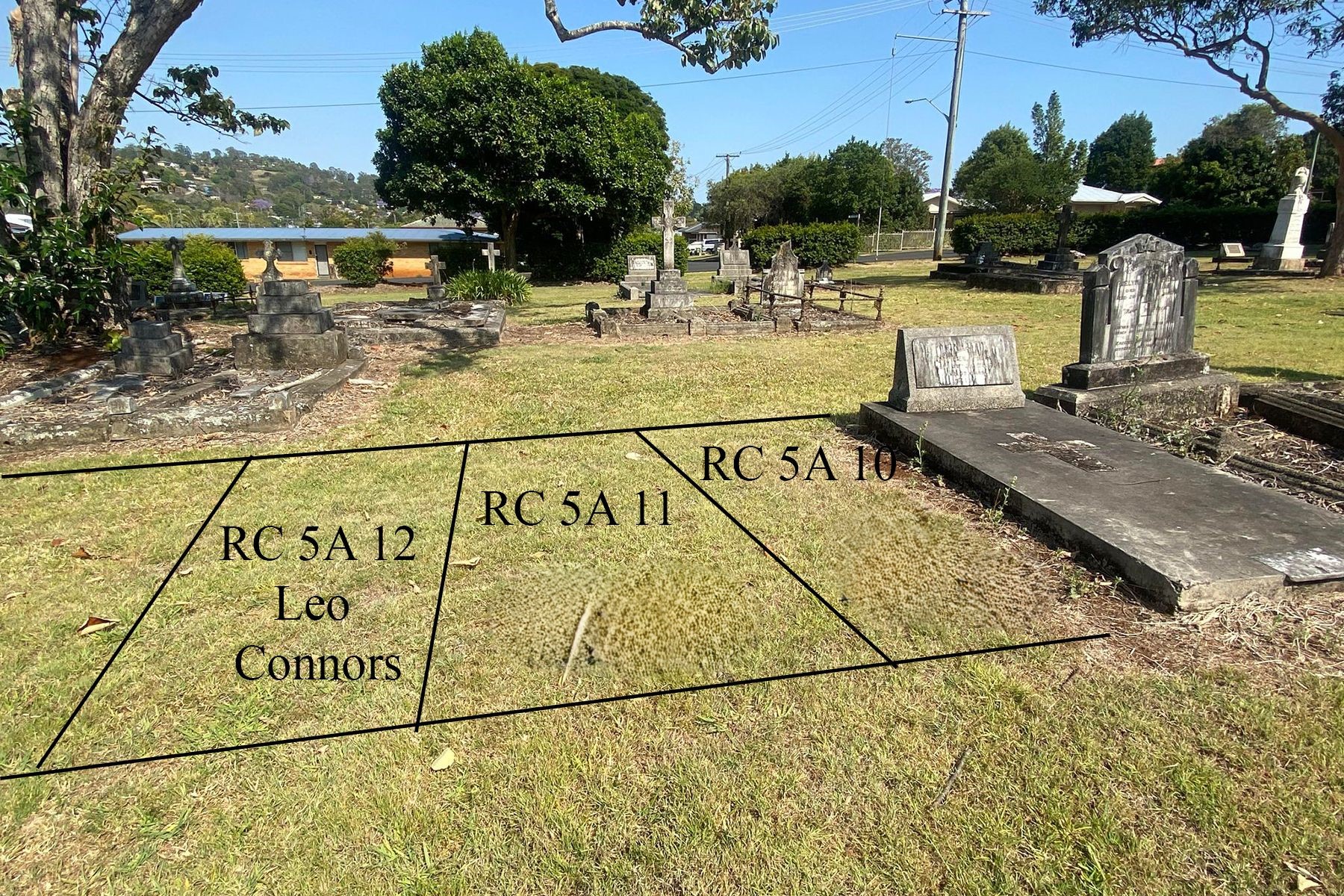
  • Their baby Leo was buried at the East Lismore General Cemetery.  He was buried in the Roman Catholic section in Row 5A, plot 12.  Heartbreakingly, his grave has remained unmarked since his burial. 

I have also previously told Leo's story in a blog post about two of George's and Grace's children who passed away in their infancy.  For those who are interest in reading more, please follow this link:  The Story of the Almost Forgotten Children of George and Grace