Showing posts with label Gympie. Show all posts

Tuesday, 27 October 2026

Where They Rest - The Burial Places Of My Brown Family

As I continue researching my family history, I have been looking more closely at the final resting places of my ancestors. Cemeteries and burial records provide another way of tracing a family's journey, revealing not only where our ancestors lived and died but also the connections between generations.


My Brown family forms part of my paternal ancestry, stretching back through my grandmother, Grace Olive Brown (1885–1974), to earlier generations of the family in New South Wales and, before that, England.


The Brown family has a particularly strong connection with the Northern Rivers district of New South Wales, especially Lismore. Several generations of the family lived in the district, and many are buried in its cemeteries. Over time, however, some family members did move further afield, settling in Sydney, Queensland and even Western Australia.


Looking at these Brown family burial places together provides an interesting picture of how some from this branch of my family gradually spread across Australia, while so many remained close to the district where earlier generations had established their homes.


In this post, I have only brought together the burial locations of my direct Brown ancestors and their siblings.  I begin with the cemeteries where many family members are buried and then move further afield.  Some graves have surviving headstones, others are unmarked, and for a few ancestors the burial location remains a mystery.


East Lismore General Cemetery, Lismore, New South Wales

East Lismore General Cemetery holds the graves of several members of the Brown family, including my paternal great-grandfather, Richard Joseph Brown, and a number of his siblings.


Richard Joseph Brown (1861–1947), 
my paternal great-grandfather, is buried in the Anglican section of the East Lismore General Cemetery, although his grave is unmarked and has no headstone. Richard was born in Lismore and lived his entire life in that town.


Several of Richard's brothers and sisters are also buried there.


His older brother, Alexander Johnson (Sandy) Brown (1849–1931), is buried in the Anglican section of the East Lismore General Cemetery. He is buried with his wife, Margaret Jane Brown (née Bustard). Their grave has a surviving memorial.


Another sibling, Anne Caroline Penelope Edwards (née Brown) (1853–1910), is buried with her husband, Edward Hocking Edwards and grandson Robert. 


Their substantial memorial, in the Non Sectarian section, provides a lasting reminder of this branch of the family and the connections between generations.


Henry Johnson Brown Jnr. (1855–1938)
is also buried at East Lismore in the Presbyterian section. His grave, like his brother Richard's, is unmarked with no headstone. 


Henry was one of several members of the family to bear the name Henry Johnson Brown, a name passed down through successive generations.


Another brother, William Norman Brown (1858–1937), is buried in the Anglican section at the East Lismore cemetery with his wife, Eliza Brown (née Cusack).


With so many members of this generation buried at East Lismore, the cemetery is particularly significant in my Brown family research. This burial place reflects the very strong connection Richard Joseph Brown and some of his siblings maintained with Lismore throughout their lives.


North Lismore Cemetery, Lismore, New South Wales


North Lismore Cemetery is another important burial place in my Brown family history, containing the graves of two generations of the family.


My paternal 2x great-grandfather, Henry Johnson Brown (1820–1868), is buried here. 


Henry was the immigrant who began my branch of the Brown family here in Australia. Born in Cumbria, England, he arrived in Australia with his sister Sarah at the age of 20 and began building a new life in New South Wales.


Sadly, his grave is unmarked, with no surviving headstone recorded in my research. 


Henry was the father of my great-grandfather, Richard Joseph Brown, and is an important link in tracing the Brown family further back through the generations.


Also buried at North Lismore Cemetery is another of Henry's sons, James Irving Clark Stephenson Brown (1859–1947), my paternal great-granduncle. His grave is also unmarked.


Although neither grave has a headstone, knowing their burial locations is valuable. It establishes another connection between two generations of the family and the district in which they made their homes. It is particularly interesting that Henry, who had travelled from England to begin a new life in Australia, is buried in the same town where so many of his descendants would spend their lives.


Lismore Roman Catholic Cemetery, New South Wales

Another Brown family burial in Lismore is that of Lillian Ruth O'Donnell (née Brown) (1887–1911), my paternal grandaunt and a sister of my grandmother, Grace Olive Brown.


Lillian is buried at the Roman Catholic Cemetery in Lismore. She died in 1911, aged approximately 24 years. Her comparatively early death stands in marked contrast to the long lives of some of her siblings, particularly her sister Elsie, who lived into her nineties.


I have not yet obtained a photograph of Lillian's grave.


Wardell Cemetery, Wardell, New South Wales


Marcella May (Marcy) Tyler (née Brown) (1892–1973)
, another sister of my grandmother, is buried at Wardell Cemetery.


Marcy is buried beside her husband, Alfred Loring Tyler, and their shared memorial survives.


Wardell is situated within the Northern Rivers district, adding to the concentration of Brown family burial places in this part of New South Wales. While some of Marcy's siblings eventually made their home further afield, her burial at Wardell reflects the continuing association of this generation of the family with the district.


Tintenbar Cemetery, Tintenbar, New South Wales


Sarah King (née Brown) (1822–1897) was a sister of my paternal 2x great-grandfather, Henry Johnson Brown.


She had accompanied her brother Henry when he emigrated from England to Australia, and both went on to establish their lives in New South Wales.


She is buried at Tintenbar Cemetery with her husband, Richard King.


Their substantial headstone is a particularly interesting surviving memorial from this earlier generation of the family.


Unlike the unmarked grave of her brother Henry at North Lismore, Sarah's burial place has a surviving monument.


Her grave provides yet another connection to the earliest generations of my Brown family in Australia and to the Northern Rivers district where both she and her brother settled.


Palmdale Lawn Cemetery and Memorial Park, New South Wales


Elsie Myrtle Harris (née Brown) (1890–1982)
was another of my grandmother Grace Olive Brown's sisters.


Elsie was cremated and a memorial plaque commemorates her at the Palmdale Lawn Cemetery and Memorial Park on the central coast of New South Wales. She had been living with her daughter at Booker Bay, also on the Central Coast, and her memorial is located relatively close to where she spent her last years.


The surviving memorial records her name and the years 1890–1982, together with the inscription "Peace, Perfect Peace." Elsie lived to approximately 92 years of age, in marked contrast to her sister Lillian, who died at such a young age.


The differences in their lifespans are a reminder of how varied the experiences of children born into the same family could be. Elsie's memorial also represents a different form of commemoration from the traditional cemetery graves and headstones of earlier generations.


Moorefields Methodist Cemetery, Kingsgrove, New South Wales


Eliza Duncan Gall (née Brown) (1863–1938)
was a sister of my great-grandfather, Richard Joseph Brown.


She is buried at Moorefields Methodist Cemetery in Kingsgrove, Sydney, close to the family home in Lakemba. Eliza shares her burial place with her husband, Robert Gall, their daughter Janet, and Janet's husband, James Luther McClelland.


This family grave is particularly interesting because it brings together members of two generations and several different family surnames. It is a good example of how burial records can reveal connections beyond the original Brown surname, helping to piece together the wider family tree.


Eliza's burial in Sydney also reflects the movement of some members of the family away from the Lismore district during their adult lives.


Rookwood Cemetery, Sydney, New South Wales

Francis Summers Hayes (Frank) Brown (1865–1928), another brother of my great-grandfather, is buried in the Church of England section of Rookwood Cemetery in Sydney.  


Francis had been living in the suburbs of Sydney for most of his adult life, and his burial at Rookwood reflects his long association with the city.  Like his sister Eliza, who is buried at Moorefields, Francis was among those members of the family whose lives eventually took them away from Lismore.


I do not currently have a photograph of Frank's grave.


Gympie Cemetery, Gympie, Queensland


Gympie Cemetery is especially important to me because it is the burial place of my paternal grandmother, Grace Olive Connors (née Brown) (1885–1974) and provides one of the closest connections between these earlier generations and my own family history.


Grace is buried beside her husband, George Connors. Her memorial records her death on 30 September 1974, and its inscription remembers her as a dear wife and mother.


Grace and George had led a rather nomadic life, working as milkers in the dairy industry in both New South Wales and southern Queensland. They eventually settled in Gympie when they were in the fifties.


Their movements reflect an aspect of family life that is not always apparent from birth, marriage and death records alone. Work and employment opportunities could take families from one district to another, sometimes resulting in quite considerable distances between relatives.


Grace's burial in Queensland, rather than in the Lismore district where so many of her Brown relatives are buried, is therefore part of the story of movement within the family.


Toowong Cemetery, Brisbane, Queensland


Robert Frederick Bayley Brown (1866–1941), a younger brother of my great-grandfather Richard Joseph Brown, is buried in the War Section of Toowong Cemetery in Brisbane. Robert had served in the First World War, making him eligible for burial in this special section of the cemetery.


He had moved to Queensland around the age of 40, not long after the death of his wife, and subsequently made his home in that state.


His grave is unmarked, although its location has been identified.


Robert's burial in Brisbane is yet another example of the Brown family's connections extending beyond northern New South Wales into Queensland. It is also interesting that, although both Robert and my grandmother Grace are buried in Queensland, their final resting places are in different parts of the state, reflecting their individual movements and circumstances.


Karrakatta Cemetery, Western Australia


One of the more distant burial locations in the family belongs to John Thomas Brown (1850–1918), another brother of my great-grandfather.


John Thomas is buried at Karrakatta Cemetery in Western Australia. He had moved to Western Australia from New South Wales in his late forties, taking him a considerable distance from the Northern Rivers district where earlier generations of the family had settled. 


His grave is unmarked, but its location has been identified.


Of the Australian burial places currently known to me, his is among the furthest from the family's concentration of graves around Lismore. It raises interesting questions about the circumstances that took John Thomas to Western Australia and the course his life followed there.


Burial Locations Still Unknown

Not every family history search leads to a known cemetery or surviving headstone. Several Brown family members remain without an identified burial location.


Two brothers of my great-grandfather, Richard Joseph Brown, died in early childhood:

  • Henry Johnson Brown (1847–1848), who died as an infant.

  • Elias Brown (1856–1858), who died at approximately two years of age.

Their exact burial locations have not yet been established.


The deaths of these two young children are a reminder of the difficulties faced by families during the nineteenth century. Although their lives were short, they remain part of the family's history and deserve to be remembered alongside their siblings who survived to adulthood.


There are also gaps in the earlier generation of the family. 


The burial places of William Brown (born 1814), Alexander Brown (born 1816) and Ann Brown (born 1829), siblings of my 2x great-grandfather Henry Johnson Brown, remain unknown.


My research suggests that they may have remained in England, but their places and dates of death have not yet been established.


Further back still is my paternal third great-grandfather, Henry Johnson Brown (1782–1853). 


His burial location has not been confirmed, although my research suggests that he may have been buried in or around Whitehaven, Cumberland, England, which was the birthplace of my 2x great grandfather and his siblings.


What These Burial Places Tell Me

When I look at the Brown family burial locations together, several interesting patterns emerge.


  • The most obvious is the family's strong association with the Lismore and the surrounding Northern Rivers district of New South Wales following Henry Johnson Brown's arrival in Australia from England. Over time, however, the graves became more widely scattered. Some members of the family were buried in Sydney, others in Queensland, and one in Western Australia, reflecting the movement of individual family members away from their original home district.


  • Another interesting pattern is the variety of cemetery sections in which members of the family are buried.  This really surprised me! Among the burial records are Anglican, Presbyterian, Methodist, Roman Catholic and Non Sectarian sections. This suggests different religious or denominational connections withing the extended family, although burial records alone do not necessarily tell the full story of an individual's beliefs.


  • I was struck by the number of unmarked graves. At least six relatives in this collection have identified burial locations but no recorded headstone, including my great-grandfather Richard and my 2x great-grandfather Henry.


  • Finally, there are those relatives whose burial places remain unknown. For some of the earlier Brown family members who may have remained in England, I have yet to establish their dates and places of death.


Remembering the Brown Family


The accompanying Brown Family Burial Places table records each relative's name, relationship to me, dates, cemetery location and additional notes, where applicable. It also identifies unmarked graves and burial locations that remain unknown.

As with all my family history research, this is a work in progress, and I hope to add further information as new records and photographs become available.


Name of Relative Relationship to Me Burial Location Notes
My paternal grandmother and her siblings
Grace Olive Connors nee Brown
1885-1974
Paternal Grandmother Gympie Cemetery, Gympie, Queensland, Australia Buried beside her husband George Connors
Lillian Ruth O'Donnell nee Brown
1887-1911
Paternal Grandaunt Roman Catholic Cemetery, Lismore, New South Wales, Australia No photo available
Elsie Myrtle Harris nee Brown
1890-1982
Paternal Grandaunt Palmdale Lawn Cemetery & Memorial Park, Sydney, New South Wales, Australia Buried at a cemetery close to Booker Bay where Elsie had been living with her daughter
Marcella May (Marcy) Tyler nee Brown
1892-1973
Paternal Grandaunt Wardell Cemetery, Wardell, New South Wales, Australia Buried beside her husband Alfred Loring Tyler
My paternal great-grandfather and his siblings
Richard Joseph Brown
1861-1947
Paternal Great-Grandfather East Lismore General Cemetery, Lismore, New South Wales, Australia Unmarked burial plot – no headstone
Henry Johnson Brown
1847-1848
Paternal Great-Granduncle Burial location unknown No photo available
Alexander Johnson (Sandy) Brown
1849-1931
Paternal Great-Granduncle East Lismore General Cemetery, Lismore, New South Wales, Australia Buried with wife Margaret Jane Brown nee Bustard.
John Thomas Brown
1850-1918
Paternal Great-Granduncle Karrakatta Cemetery & Crematorium, Karrakatta, Western Australia, Australia Unmarked burial plot – no headstone. Had moved to Western Australia in his late 40s.
Anne Caroline Penelope Edwards nee Brown
1853-1910
Paternal Great-Grandaunt East Lismore General Cemetery, Lismore, New South Wales, Australia Buried with husband Edward Hocking Edwards in a plot with quite a substantial monument.
Henry Johnson Brown
1855-1938
Paternal Great-Granduncle East Lismore General Cemetery, Lismore, New South Wales, Australia Unmarked burial plot – no headstone.
Elias Brown
1856-1858
Paternal Great-Granduncle Burial location unknown No photo available.
William Norman Brown
1858-1937
Paternal Great-Granduncle East Lismore General Cemetery, Lismore, New South Wales, Australia Buried with wife Eliza Brown nee Cusack.
James Irving Clark Stephenson Brown
1859-1947
Paternal Great-Granduncle North Lismore Cemetery, Lismore, New South Wales, Australia Unmarked burial plot - no headstone.
Eliza Duncan Gall nee Brown
1863-1938
Paternal Great-Grandaunt Moorefields Methodist Cemetery, Kingsgrove, New South Wales, Australia Buried with husband Robert Gall, daughter Janet and her husband James Luther McClelland.
Francis Summers Hayes (Frank) Brown
1865-1928
Paternal Great-Granduncle Church of England Cemetery, Rookwood, New South Wales, Australia No photo available.
Robert Frederick Bayley Brown
1866-1941
Paternal Great-Granduncle War Section, Toowong Cemetery, Brisbane, Queensland, Australia Unmarked burial plot – no headstone. Robert had moved to Queensland around the age of 40, not long after the death of his wife. He served in WW1.
My paternal 2x great-grandfather
Henry Johnson Brown
1820-1868
Paternal Great Great-grandfather North Lismore Cemetery, Lismore, New South Wales, Australia Unmarked burial plot – no headstone
William Brown
1814-
Paternal 2nd Great-Granduncle Burial Location Unknown. No photo available
Alexander Brown
1816-
Paternal 2nd Great-Granduncle Burial Location Unknown. No photo available
Sarah King nee Brown
1822-1897
Paternal 2nd Great-Grandaunt Tintenbar Cemetery, Tintenbar, New South Wales, Australia Buried with her husband Richard King in a burial plot with quite a substantial monument
Ann Brown
1829-
Paternal 2nd Great-Grandaunt Burial Location Unknown No photo available
My paternal 3x great-grandfather
Henry Johnson Brown
1782-1853
Paternal Great Great Great-Grandfather Burial Location Unknown – Likely in Whitehaven, Cumberland, England No photo available

Monday, 8 July 2024

Memories ... July 9

 In Remembrance

(For my 'Family Anniversaries' page)


Today is the anniversary of the passing of two of my paternal uncles, my Uncle Tommy who passed away at the age of 61, and his brother Leo, who passed away when only 3 days old.

Both were the sons of George Thomas Connors and Grace Olive Brown (my paternal grandparents).


  • Thomas Richard Connors (known as Tommy) was born on the 19th of April 1911 at McGougan's Lane in Mullumbimby, New South Wales.  This is likely the address of the family's home at the time and his was likely a home birth.

  • Thomas was the third of eleven children born to George and Grace.

  • At the age of 21, Thomas married Dulcie Elizabeth Charlotte Hunt, but this marriage did not last.  Together, Thomas and Dulcie had a son named Noel William, born in 1934.

  • At the age of 29, Thomas enlisted with the 2nd AIF for service in World War 11.

  • He served in Darwin in 1940, in the Middle East between the end of 1940 and the start of 1943, and then in New Guinea from mid 1943 to the start of 1946.

  • During his time in the Middle East, Thomas was one of the famous Rats of Tobruk.

  • In 1947, at the age of 36, Thomas re-married.  He and his wife Catherine Millicent Soames remained married until Thomas passed away.  Together they had four children. 

  • From around 1950, Thomas's occupation was Forestry Worker and throughout the 1950s and 1960s, he and his family lived at Imbil in Queensland.

  • Thomas passed away in Gympie, Queensland in 1972 and is buried at the Gympie Cemetery.


I told Tommy's story last year in much more detailed blog post that included lots of information about his war service.  For those interested in following up on this, please click on this link:  The Story of Thomas Richard Connors  


Tragically, the story of Thomas's younger brother Leo is much shorter.

  • Leo Connors was born on the 6th of July 1921 in Lismore, New South Wales.

  • He was the seventh of eleven children born to George and Grace.

  • Leo was born at the Bonnie Doon Private Hospital in Lismore, but in a tragic turn of events, he passed away on the 9th of July.

  • There was an inquest held into the circumstances of his death and the resulting finding listed the cause of death as  "cardiac failure through being accidentally overlain". 

  • At the time of Leo's death, his brother Thomas was only 10 years old.  I imagine it would have been very hard for Thomas to fully understand what happened to his baby brother! 

  • Leo's parents (my grandparents) George and Grace would have been devastated.  George at the time was working as a butcher in Lismore and Grace was a homemaker, taking care of their six other children.  No doubt it took every ounce of their resilience and fortitude to carry on for the sake of their family.


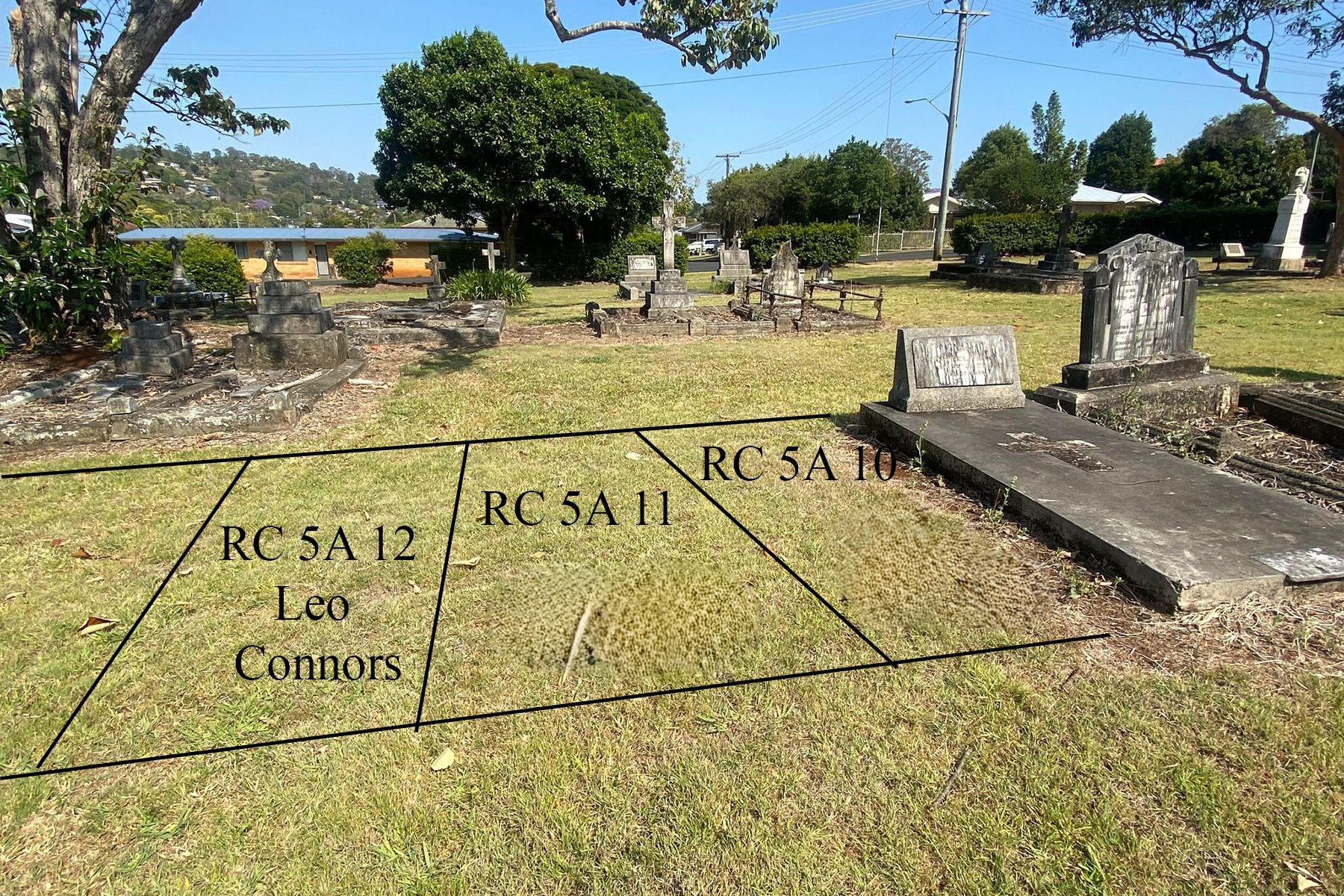
  • Their baby Leo was buried at the East Lismore General Cemetery.  He was buried in the Roman Catholic section in Row 5A, plot 12.  Heartbreakingly, his grave has remained unmarked since his burial. 

I have also previously told Leo's story in a blog post about two of George's and Grace's children who passed away in their infancy.  For those who are interest in reading more, please follow this link:  The Story of the Almost Forgotten Children of George and Grace


Saturday, 3 February 2024

Memories ... February 4

Anniversary of two Birthdays :   

(For my 'Family Anniversaries' page)


Today is the anniversary of the birth dates of two very special people in my family ... my paternal Grandmother, Grave Olive Connors nee Brown, and my paternal Aunt, Betty Patricia Hodgins nee Connors ... mother and daughter.

I have written about my paternal grandmother before and for anyone interested here's the link to her story:  The Story of Grace Olive Brown 


I have not yet written about my aunt, so today seems a fitting moment in time to tell some of her story.

  • Betty Patricia Connors was born in 1929 in the town of Beaudesert in Queensland.

  • She was the youngest of eleven children born to George Thomas Connors and Grace Olive Brown, although by the time she came into the world two of her siblings had sadly passed away.

  • At the time of her birth, her father George was 48 years old and her mother Grace was 44.  Of course, Grace would have been celebrating her own birthday on the day she was giving birth to her youngest daughter. 

Betty (centre front row) holding the hands of her twin brothers Reggie and Bede
while her older brother Tommy and oldest sister Beryl look on.
Photo likely taken around 1933 when Betty was aged 4.
(Photo shared by my cousin Keith Connors) 


  • Betty attended the Gympie Convent School until she was in Year 8.  She then left school and started working for a tailor.  She would have been around 14 or 15 years old at this time.  This was however not a career path she would go on to follow.

Betty at her Debutante Ball 1947, aged 18
(Photos shared by my cousin Keith Connors)


  • At the age of 18, Betty made her 'debut' and attended her Debutante Ball.  This was a very important social event in the life of a young lady.  Attending a deb ball was regarded as the moment you were officially launched into society and could start your social life.  From then on, a young lady could attend various dances, balls, dinners and other social events with eligible young men!

Betty standing in the middle of the photo, dressed in her nurses' uniform.
Her nieces Pat and Ann are standing to the left, and her parents, Grace and George to the right.
Photo likely taken in 1948 when Betty was 19 years old.
(Photo from my father's collection) 

  • Betty began her nursing training around the age of 17 or 18 at the Glandore Hospital in Gympie.  Nursing turned out to be a passion of hers during her lifetime.

Photos taken around 1946-1947


John Frederick Hodgins
known as Bunny


  • When she was 20 years old, Betty married John Frederick Hodgins, known as 'Bunny' Hodgins.  He was a working musician, a music teacher and an absolute "wizard with the banjo".   Bunny and Betty shared a great love of music throughout their married life.


  • They were married for 45 years, until the passing of Bunny in 1994.  They had one daughter together.


  • Betty passed away in 2022 at the age of 93.  She was laid to rest with her dear husband Bunny at the cemetery in Gympie.

  • Often when the cousins start reminiscing about our Aunty Betty, the first thing that comes to mind was her great love of singing and music.  She also had a fantastic sense of humour, a great love of family and a rather quiet, dignified and graceful presence.

Sharing some other photos of our beloved Betty:

My Aunt Betty holding me ... on the front steps of my grandmother's house in Gympie
1960 ... Betty  would have been 31 years old


My Aunt Betty, far left, standing with her daughter while her mother Grace (my grandmother) holds me
1960


Aunty Betty with some of her siblings and her beloved husband
L-R: Betty, her brother Bede, her husband Bunny, her sister Olga, her sister Chris, and her sister Beryl.
Photo taken in 1986 when Betty was 57 years old
(photo from my own collection)


Betty with some of her siblings in 1999, when she was aged 70.
L-R:  her sister Chris, her brother Reggie, her sister Olga, her sister Beryl and Betty


Betty celebrating her 90th birthday in 2019
(photo shared by my cousin Carmel)


My Aunt Betty at her 90th birthday celebration
surrounded by her daughter, her son-in-law, her grandchildren and partners, and her great grandchildren
(photo shared by my cousin Carmel)


Wednesday, 18 October 2023

Memories ... October 18

  Anniversary of two Birthdays:   

(For my 'Family Anniversaries' page)


  • My paternal Uncle Colin and Aunt Christina were both born on this day, but were born seven years apart.

  • They were siblings amongst eleven children born to George Thomas Connors and Grace Olive Brown. 

  • While Colin was known as Colin throughout his life, Christina was known as either Chris or Chrissie.

  • Here are a few more details about them:


Photos of Colin:

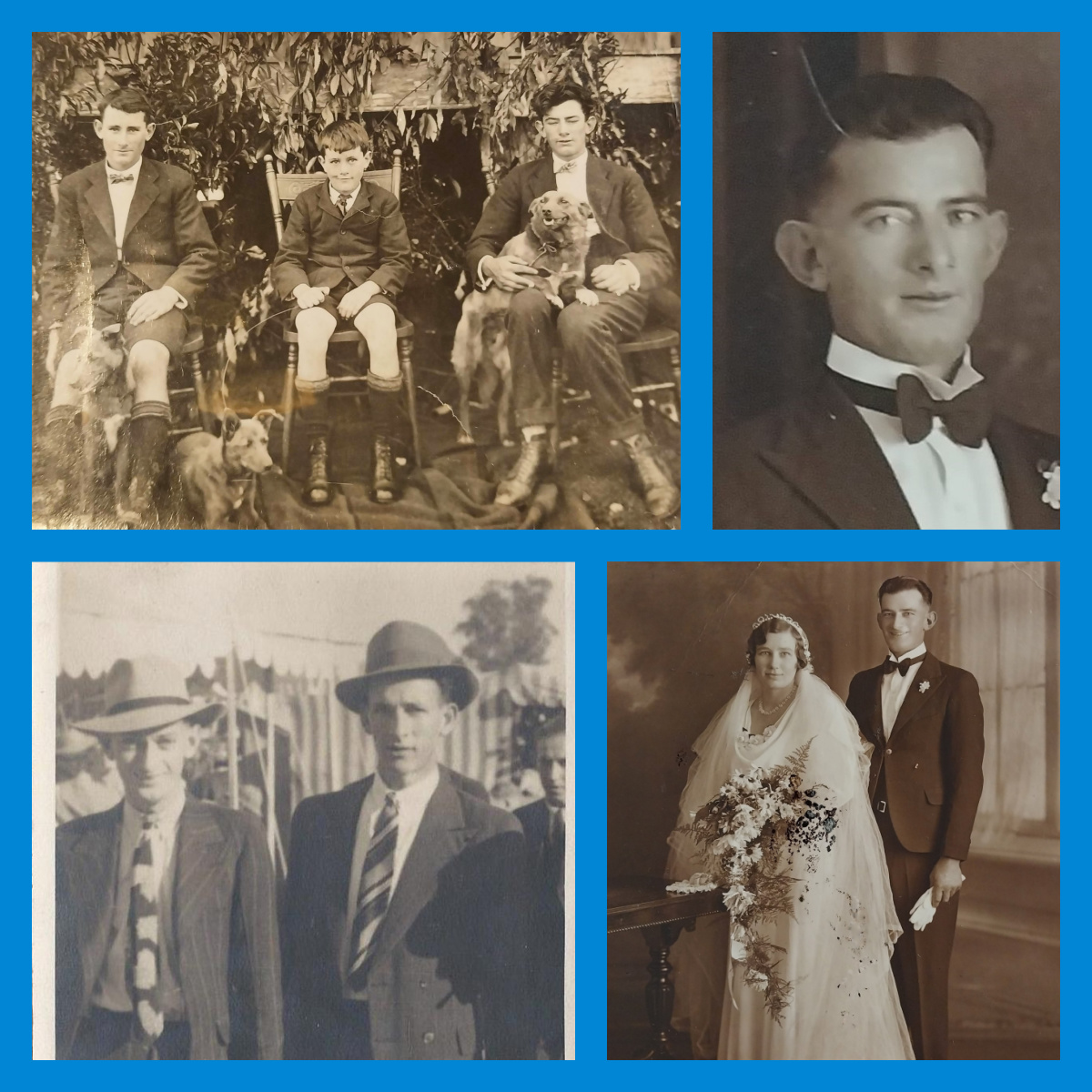
Top left:  L-R  Thomas Richard Connors, George Thomas Connors Jnr. and Colin Vincent Connors
Top right:  Colin Vincent Connors on his wedding day
Bottom left:  L-R  Bede William Connors with his brother Colin Vincent Connors
Bottom right:  Colin Vincent Connors and his first wife Ruth Masters on their wedding day.


Photos of Chris / Chrissie:


Top left:  Chrissie (on the bottom stair) with her younger sister Betty and niece Anne
Top right:  L-R  Olga Connors (older sister) and Chrissie Connors 
Bottom left:  Chrissie Connors with her younger brother Bede William Connors
Bottom right:  Chrissie Connors with her niece Bernadette  (that's me!)


Friday, 29 September 2023

Memories ... September 30

 In Remembrance

(For my 'Family Anniversaries' page)


Today is the anniversary of  the passing of my paternal Grandmother, Grace Olive Brown  1885 - 1974.

My grandmother passed away forty-nine years ago today, having lived a life that spanned eras of progress, challenges and cultural revolution.  She witnessed the world transform in ways so unimaginable when she was born.  

In the year 1885 Grace was born into a world brimming with possibilities.  That year saw the launch of the world's first mass production of shoes, a small but significant step in the march of industry.  In the realm of science, 1885 marked a milestone as Louis Pasteur successfully tested an anti-rabies vaccine, offering hope in the fight against the deadly disease.  The world of music was graced with Brahm's '4th Symphony in E' and in the literary world, Mark Twain's 'Adventures of Huckleberry Finn' made its debut, captivating readers with the adventures of its young protagonist.

Fast forward to the year 1974, the year of Grace's passing, and the world had undergone profound transformations.  President Richard Nixon's resignation following the Watergate Scandal shook the foundations of American politics.  The global landscape was affected by the aftermath of the 1973 oil crisis, a period of great economic and energy uncertainty.  The 'Rumble in the Jungle' took place, with Muhammad Ali defeating George Foreman in a legendary boxing match that transcended the sport; and Swedish pop group ABBA achieved international acclaim by winning the Eurovision Song Contest with their catchy song 'Waterloo', solidifying their place in the rich tapestry of music history.


  • Grace was born in in Lismore, New South Wales in February of 1885.  She was the oldest of four daughters born to Richard Joseph Brown and Ellen Cusack.

  • Grace married George Thomas Connors in July of 1906.  She was 21 years old and he was 26.

  •  They went on to have 11 children over the following 21 years, although only nine survived into adulthood.
Left:  Grace attending the Show
Top right:  Grace, likely on her wedding day in 1906
Bottom right:  Grace and husband George in their later years


  • Grace and George began their married life in Lismore, but they would soon be roaming across northern New South Wales and southern Queensland following the opportunities for dairy farm work wherever they could be found.

  • From 1908 to the early 1930s, Grace, George and their growing family lived in various places including Mullumbimby, Legume, and North Lismore in New South Wales, as well as Killarney, Maleny and Beaudesert in Queensland.

  • Eventually Grace and George settled down in Gympie, Queensland and lived there from around 1935 onwards.

  • Grace passed away in 1974, eight years after the death of her beloved husband George. She was survived by all her children except her son Thomas, and was buried at the cemetery in Gympie next to her husband.

As today is a special day of remembrance, I completed an update of the original blog post I published about my grandmother many years ago on my family tree blog.  

For anyone interested in reading this longer, more detailed story about Grace's life, please click here:  The Story of Grace Olive Brown ... Updated!


Top left:  Grace holding her granddaughter Bernadette Grace (me!) 1960
Bottom left:  Grace going shopping with her granddaughter Ann  c.1946
Top right:  Grace with her husband George, daughter Betty (in the nurses uniform) and granddaughters Ann and Pat.
Bottom right:  Grace holding her granddaughter Bernadette, with her daughter Betty and granddaughter Karen (Betty's daughter).


Sunday, 23 April 2023

The Story of Thomas Richard Connors / Memories ... April 19

This post tells the story of my paternal Uncle, Thomas Richard Connors  (1911 - 1972).

Our common ancestors are:  George Thomas Connors and Grace Olive Brown.

I'm publishing this post on the anniversary of my uncle's birth.


 Anniversary of a Birthday:   

(For my 'Family Anniversaries' page)

*Our common ancestors are: George Thomas Connors and Grace Olive Brown.
 
  • My paternal uncle, Thomas Richard Connors, was born on the 19th of April 1911, at Mullumbimby, in New South Wales.

  • His father was George Thomas Connors and his mother was Grace Olive Brown.

  • Thomas was the third-born of eleven children born to George and Grace, and he was known as 'Tommy' to his family. 

  • Tommy's father George worked on dairy farms in the Richmond Valley / Lismore area of New South Wales between Tommy's birth year 1911 and the early 1920s.  The family moved around for quite some time, to wherever George was able to find work.  By 1924, when Tommy was 12 years old, the family had moved to Queensland, around the Maleny area at first, but then further south around Beaudesert.  By 1936, father George, mother Grace and a few of Tommy's siblings had moved to Gympie.

  • In 1932, aged 21, Tommy married Dulcie Elizabeth Charlotte Hunt at Murgon in Queensland, and they went on to have a son two years later.  It seems however that the marriage did not last.

  • The 1936 and 1937 Australian Electoral Rolls records Tommy living at Mellor Street in Gympie, and there is no mention of his wife Dulcie.


  • The 1936 electoral roll record shows he is with his father George and his sister Beryl at Mellor Street.  His mother was recorded as living in Wickham Street that day, and I'm not entirely sure why this would be so.


  • The 1937 electoral roll record shows Tommy living on his own at Mellor Street, while his parents and older sister have moved to O'Connell Street.

Image courtesy of the Australian War Memorial
AWM ARTV06766.

  • Tommy enlisted with the 2nd AIF on the 3rd of June 1940, exactly nine months after the Australian Prime Minister Robert Gordon Menzies had announced Australia was at war with Germany.  He joined the 2/15 Australian Infantry Battalion.


  • The attestation form completed and signed by Tommy states that he was 29 years 1 mth old, and that he was single.  While he might have been estranged from his wife, he was actually still married at this stage.  He gave his address as O'Connell Street in Gympie, which was the address of his parents.

This was Tommy's enlistment photo, taken a month after his 29th birthday.


His war service lasted until the end of January 1946.


He served firstly in the Middle East, from his disembarkation in February 1941, to February 1943.  


Tommy was a 'Rat of Tobruk" during 1941.

The Siege of Tobruk was a confrontation that lasted 241 days between Axis and Allied forces in North Africa during the Western Desert Campaign of World War Two. The siege started on 10 April 1941, when Tobruk was attacked by an Italo–German force under Lieutenant General Erwin Rommel and continued for 241 days up to 27 November 1941, when it was relieved by the Allied 8th Army during Operation Crusader.

The “Rats of Tobruk” was the name given to the soldiers of the garrison who held the Libyan port of Tobruk against the Afrika Corps during the Siege. 

The garrison, commanded by Lieutenant General Leslie Morshead, consisted of the 9th Australian Division (20th, 24th, and 26th Brigades), the 18th Brigade of the 7th Australian Division, four regiments of British artillery and some Indian troops.

(excerpt from www.monumentaustralia.org.au)


The men of the Tobruk garrison lived in dugouts and caves, enduring scorching hot days, freezing cold nights and dust storms, all the while under daily bombings, tank attacks and artillery barrages.  Ordered to hold back the German advance for eight weeks, they held on for five months!

Tommy was in Tobruk for eight months in 1941 and towards the end of the war he would state that three months of that time was "very bad"!


A record of the 'Rats of Tobruk' put together in 2018, p. 102
https://ratsoftobrukassociation.org.au/wp-content/uploads/2021/07/TOBRUK_AK_WEB_020721R.pdf 
found on the Rats of Tobruk Association website


(Photo held by the Australian War Memorial - Copyright expired - public domain)
L-R:  QX5873 Corporal Douglas John Allen, died of wounds on 22 September 1943 in New Guinea;
QX5139 (later 11189) Corporal John Thomas Sheppard, later awarded a Military Medal;
QX10535 Lance Corporal Alfred Claude Kling, died of wounds on 1 September 1942 in Libya;
QX17607 Corporal Paul Stewart Persse Delpratt;
QX3352 Private Thomas Richard Connors;
QX1970 Pprivate Stanley Lentell;
QX3350 Private Eric George Crawford, died of wounds on 27 October 1942 in Libya.

  • The photo above shows a group portrait of members of the 2/15 Battalion, including my uncle Tommy.  He is 3rd from the right.  The photo was taken sometime in 1941 when they were serving in the Middle East.  Only four men in this group returned home to Australia at the end of the war.

  • Tommy also served at El Alamein as a Bren Gunner, for about four to five months, and he would recall later on that "There was a lot of shelling on the first night and we were shelled for about four to five days.  The noise of our own artillery guns was very bad and we couldn't sleep."  That was his experience in just the first week there.

  • After being withdrawn from the Middle East, the 2/15 Battalion then served in New Guinea, from 1943 to 1946.  During those years, Tommy suffered many bouts of malaria and both his physical and psychological health deteriorated.

  • I know from stories told by my father (who was Tommy's brother), that the war experiences were deeply traumatic for Tommy and left wounds not visible to the eye.   A photo of Tommy was taken upon his discharge in January of 1946 and when putting his enlistment and discharge photos side-by-side, I think the impact of his war service is clearly evident.


  • At the beginning of 1945, Tommy's first marriage had been dissolved by decree of the Supreme Court of Brisbane.  
.
  • He was discharged from the Australian Military Forces in January of 1946.

  • After his discharge, Tommy married Catherine Millicent Soames (known as Cathy) when he was 36 years old.  They were married in Nambour, Queensland in 1947.   At that time, Tommy was working as a public works employee.


  • The 1949 electoral roll shows Tommy, aged 38, and wife Catherine living in  Channon Street, Gympie.

  • Tommy and Catherine went on to have four children, and during the 1950s the family was living at Imbil, near the Imbil State Forest in southern Queensland.  


  • The 1954, 1958 and 1963 electoral rolls show that Tommy and Catherine were living at Stirling Crossing at Imbil, and Thomas's occupation was forestry worker.

  • The 1969 electoral roll shows Tommy, aged 58, was still working as a forestry labourer, but was now living back in Gympie with his wife Catherine.


  • Sadly, Tommy passed away not much later, in 1972, aged 61.  He was buried at the cemetery in Gympie.


  • A plaque was also erected to Tommy's memory at the Garden of Remembrance in Brisbane, in honour of his service to our country.


  • Fittingly and rightly so, Tommy's grandson has proudly marched in a previous Anzac Day parade wearing his grandfather's medals.

  • On this 2023 Anzac Day, 77 years after Tommy's discharge from war service, we remember him.